
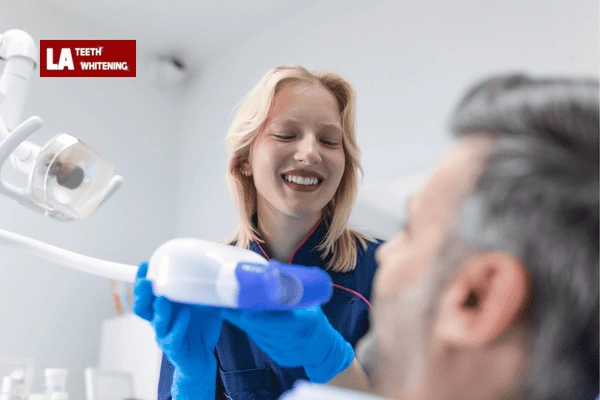
If you’re looking for a way to brighten your smile, laser whitening might have caught your attention. It’s a highly effective and quick method for achieving noticeable results. But how exactly does it work? This blog dives into the science behind laser whitening, the step-by-step process, the kinds of discoloration it can address, and tips for maintaining your results.
The Science Behind Laser Whitening
Laser whitening uses advanced technology to treat discoloration, making it a highly effective cosmetic solution. The procedure relies on a specialized whitening gel applied to the surface of your smile. This gel contains active ingredients that are triggered by the energy of a laser or a specific light source.
The light plays a crucial role, as it accelerates the reaction of the gel’s active components. These ingredients work by breaking down the chemical bonds of stains that have set on or below the surface. The result? A brighter, more luminous appearance in less time compared to other methods.
One of the unique aspects of laser-based whitening is its ability to penetrate deeper layers. While surface discoloration is treated, it also addresses some of the more stubborn deeper stains, making it versatile and thorough.
Types of Stains Laser Whitening Can Address
One of the strengths of laser whitening is its ability to effectively tackle a variety of discoloration types, including:
– **Food and Beverage Stains:** Drinks like coffee, tea, sodas, and red wine are infamous for their staining effects. The laser-activated gel works to lift these deeply set stains, restoring vibrancy.
– **Tobacco Discoloration:** Nicotine and tar from smoking can leave a dull or yellowed appearance. Laser whitening has shown great results in reversing the effects of prolonged tobacco use.
– **Age-Related Changes:** Over time, natural aging may dull the overall brightness of your smile. Laser treatments can help restore a more youthful appearance by targeting deeper discoloration.
While highly effective for external stains, it’s important to note that not all discoloration can be treated with laser whitening. Internal or structural issues may require alternative solutions for optimum results.
Benefits of Laser Whitening
Laser whitening offers several amazing benefits that make it stand out from other whitening methods:
– **Quick Results:** Unlike over-the-counter products or home remedies that take weeks to show changes, laser whitening often delivers noticeable results in just one session.
– **Targeted Treatment:** Thanks to precision, it ensures that the whitening process is even and consistent, giving you a uniform outcome.
– **Lasting Brightness:** With proper care and maintenance, the results are not only immediate but also durable.
Tips for Maintaining Your Results
To make the most of your newly brightened smile, it’s important to adopt a few good practices. Here are some tips to keep the glow going:
1. **Limit Staining Foods and Drinks**
Beverages like red wine, coffee, and soda tend to stain over time. If you can’t avoid them entirely, consider drinking through a straw to minimize their effect.
2. **Stay Hydrated**
Drinking water regularly can help flush away particles that might stick and cause discoloration. Rinsing your mouth after meals can also prevent stains.
3. **Stick to Good Daily Habits**
Maintaining a consistent routine of brushing and flossing plays a big role in keeping your smile looking fresh. Products labeled as “whitening” or “brightening” can help slow down the reappearance of discoloration.
4. **Touch-Up Sessions**
Some people find that periodic touch-ups help preserve the results over time. These can be done professionally or through follow-up care products suggested by your provider.
FAQs
Q: How does laser whitening work?
Laser whitening works by combining a specially formulated whitening gel with a controlled laser or light source. The gel is applied to the surface, and the laser activates its active ingredients, triggering a chemical reaction that breaks down stain molecules. These broken-down particles are then lifted away, revealing a brighter and more refreshed appearance in a relatively short amount of time.
Q: What role does the laser play in the whitening process?
The laser itself doesn’t bleach the surface directly. Instead, it accelerates and enhances the effectiveness of the whitening gel. By energising the active ingredients, the laser allows the gel to penetrate more effectively and work faster, producing noticeable results in a single session compared to slower, traditional methods.
Q: Is laser whitening effective for deep or stubborn stains?
Yes, laser whitening is particularly effective at treating deep-set and stubborn stains, especially those caused by coffee, tea, red wine, smoking, and ageing. The light activation helps the gel reach beneath surface-level discolouration, making it more effective than many over-the-counter products.
Q: What types of stains can laser whitening address?
Laser whitening works best on external stains, such as those from food, beverages, tobacco use, and natural ageing. These stains respond well to the chemical reaction created by the gel and laser. However, internal or structural discolouration may require alternative cosmetic treatments for optimal results.
Final Thoughts
Laser whitening is a cutting-edge solution that combines science and technology to deliver exceptional results. By targeting stains at both the surface and below, it provides a noticeable and fast improvement compared to many traditional options. Whether it’s for a special event or just to boost your confidence, this treatment is a fantastic way to brighten your appearance.
When paired with good habits and regular care, the results of laser whitening can truly stand the test of time. If you’ve been considering enhancing your smile, this method offers a quick, reliable, and highly effective solution.